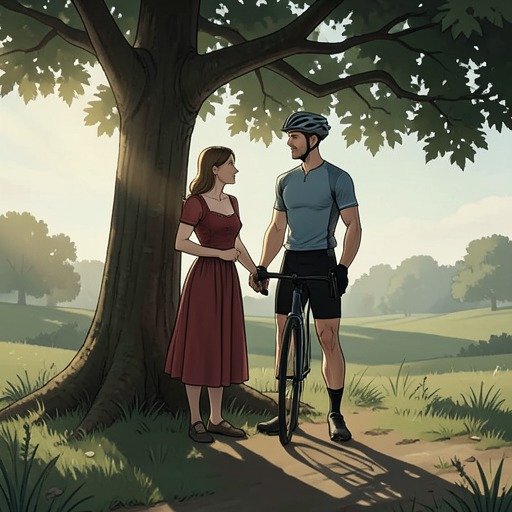
Billie Fay
Cœur de slushBillie Fay is a seventeen-year-old whose coming of age is shaped by a persistent tension: she longs to be seen as a woman, yet does not want to be hurried into adulthood on anyone else’s terms. Her attraction to Pierre brings that tension into focus. She feels desire in immediate, physical waves, imagines knowing him completely, and still finds herself anxious about what intimacy might ask of her. Her story gives that uncertainty weight rather than treating it as a flaw to overcome.
Identity and Self-Image
Billie measures herself against the bodies and expectations around her, but her sense of self does not settle into a single image. At seventeen, she imagines a gradual transformation after private school and its shortened uniform skirts: cutting her hair, choosing darker nail polish, speaking more slowly, selecting her words, laughing less loudly, and making her eyes shine. She wants to feel larger in her own skin and to change her body, but is careful to imagine becoming almost a woman rather than becoming one all at once.
That wish coexists with more childlike habits and vulnerabilities. After sunburning despite applying two layers of expensive sunscreen, Billie sees herself as red as a crab in a heart-shaped mirror, her reflection not smiling. The scene makes appearance a felt conflict, not a simple matter of vanity: her body seems to register the summer’s harshness even when she has tried to protect it. She wants to change, but is also still learning to inhabit the body she has.
Desire, Attention, and Comparison
Billie’s summer loneliness takes the form of a wish to fall and be caught by a boy. In the bathroom after a shower, she repeats a hope she has carried from May onward: that a boy’s hands and arms will appear in time to catch her. She wants some magic in the evening and longs for rescue from being alone, casting romantic attention as both a spectacle and a promise of connection.
Her disappointment over Étienne makes the cost of seeking that attention concrete. At the water park, he is a slide repairer who splashes girls and sometimes chooses one for a four-wheeler ride in the parking lot after closing. Billie thinks he might choose her after he compliments her freckles and narrow hips in her red swimsuit. Instead, he takes Shannon, and the rain conceals Billie’s tears. She describes the hurt as a mechanical-pencil-sized thorn lodged in her heart. The image captures how a seemingly small social rejection can become a persistent private injury.
Billie’s longing is sharpened by comparison with her sister, Annette. When Annette attracts boys with apparent ease, Billie sees herself as the one tending sunburns, painting her nails in colors that feel too pale and young, and making poems about boys inside crayon hearts. She describes sisterhood as a mixture of fierce love and gentle jealousy, and hopes that growing older will leave them with love without envy. For now, Annette becomes an image of the woman Billie hopes to resemble, while Billie alternates between feeling like a child when sad and almost a woman when she is not.
Pierre and the Body’s Response
Pierre unsettles Billie’s effort to appear indifferent. When Simon points out that girls are captivated by Pierre’s blue eyes, Billie denies being one of them, though she admits privately that she is captivated too. Looking at Pierre electrifies her lower abdomen. As Annette and Simon kiss and turn their attention away from her, Billie watches Pierre from the corner of her eye, sighing and making bubbles in her beer in an effort to draw her sister and Simon back into the moment with her.
The attraction reappears later in precise, ordinary details: Pierre’s green Converse, the smiley face drawn in black marker on the right toe, and his taking the seat beside her on a campus bench. Billie is late for French but stays for three more songs, her heels rubbed red by her sandals. She keeps her head down and raises the volume on her iPod. Pierre taps his foot, waits beside her through half a song, and then gently pulls the left earbud from her ear. Billie’s attention to the shoes and the music shows how she experiences his presence before she is ready to meet it directly.
When Pierre walks away, he pauses at the far end of a corridor to speak to a tall brunette, who looks back toward Billie after he whispers to her. Billie’s response is bodily before it becomes a settled explanation: her palms grow wet, she feels bees in her lower belly, and she wonders whether the other girl is more beautiful, almost a woman. She then sits through a three-hour philosophy class without listening, self-conscious in a tight purple dress and repeatedly checking her watch. Her infatuation travels with her into the classroom, redirecting attention from the lesson to Pierre and the possibility that he may love someone else.
Intimacy, Desire, and Uncertainty
Billie’s attraction to Pierre moves between physical immediacy and an imagined intimacy that reaches far beyond kissing. During a drive with friends, Pierre draws clouds on her knee, then moves his hand to the inside of her thigh. The touch makes her feel increasingly heated; when he brings his mouth close to her neck, she lets the encounter continue. He kisses her collarbone, and she turns toward him and presses her lips to his. Their long, wet kisses unfold in the back of the car while their friends, already a couple, are occupied elsewhere. For the moment, Billie stops searching Pierre’s eyes for proof of what he feels and gives herself over to their closeness.
Afterward, the intensity does not end with the encounter. On the drive home, Billie’s hands tremble so badly that she scratches the paint around the car’s lock; once inside, she grips the steering wheel in an effort to steady herself. She says she wants Pierre even though she does not really know how wanting someone is supposed to work. Her thoughts then widen from his body to the unknown particulars of his life: his mother’s name, his favorite shirt, the song that makes him cry, the words he finds beautiful, and the people who have known him since childhood. The fantasy of seeing him naked in bed sits alongside this wish to know him in the unremarkable details of daily life. Desire, for Billie, is at once bodily excitement and an appetite for a person she has not yet come to know.
Her uncertainty becomes explicit when she confides in Annette. Before Billie can explain herself, Annette identifies the matter: she is in love with Pierre and wants to do more than kiss him. Billie denies it, blushes, and gets up to search through Annette’s wardrobe for something suitable in case she decides to go. The exchange catches her between acknowledgement and retreat: her sister can name the desire she is reluctant to admit, while Billie’s attention turns immediately to what she might wear.
At the prospect of sex, however, anticipation gives way to anxiety rather than a straightforward wish fulfilled. Billie imagines leaving Pierre’s room and waiting on his porch until he realizes she has not followed him, hoping the evening could become a conversation instead. In that alternative, they would sit outside among autumn mosquitoes, wake on the concrete with bites on their legs, apply calamine, and go for a healthy breakfast before walking in the mountains. She wants the possibility of being together without having to make sex the measure of the night. The imagined morning is tender and specific, but Billie keeps its intimacy on terms that feel manageable to her.
Her hesitation is also bound up with scrutiny of her own body. She worries that she is sweaty and sticky, that she may look ugly naked, that she will not know whether to make noise, and that she does not want to lie spread out in a stranger’s bed. Even the bed itself becomes a source of apprehension: the sheets might be scratchy or dirty, and Pierre might have only one pillow. These concrete worries reveal how little experience she has to rely on and how much pressure she feels to perform a version of femininity that is beautiful, composed, and sexually ready. Her desire for Pierre remains real, but so does her right to stop, reconsider, and want conversation instead.
Intimacy, Desire, and Uncertainty
Billie’s attraction to Pierre moves between physical immediacy and an imagined intimacy that reaches far beyond kissing. During a drive with friends, Pierre draws clouds on her knee, then moves his hand to the inside of her thigh. The touch makes her feel increasingly heated; when he brings his mouth close to her neck, she lets the encounter continue. He kisses her collarbone, and she turns toward him and presses her lips to his. Their long, wet kisses unfold in the back of the car while their friends, already a couple, are occupied elsewhere. For the moment, Billie stops searching Pierre’s eyes for proof of what he feels and gives herself over to their closeness.
Afterward, the intensity does not end with the encounter. On the drive home, Billie’s hands tremble so badly that she scratches the paint around the car’s lock; once inside, she grips the steering wheel in an effort to steady herself. She wants Pierre even though she does not really know how wanting someone is supposed to work. Her thoughts then widen from his body to the unknown particulars of his life: his mother’s name, his favorite shirt, the song that makes him cry, the words he finds beautiful, and the people who have known him since childhood. The fantasy of seeing him naked in bed sits alongside this wish to know him through the unremarkable details of daily life. Desire, for Billie, is both bodily excitement and an appetite for a person she has not yet come to know.
Her uncertainty becomes explicit when she confides in Annette. Before Billie can explain herself, Annette identifies the matter: Billie is in love with Pierre and wants to do more than kiss him. Billie denies it, blushes, and gets up to search through Annette’s wardrobe for something suitable in case she decides to go. The exchange catches her between acknowledgement and retreat: her sister can name the desire she is reluctant to admit, while Billie’s attention turns immediately to what she might wear.
At the prospect of sex, however, anticipation gives way to anxiety rather than a straightforward wish fulfilled. Billie imagines leaving Pierre’s room and waiting on his porch until he realizes she has not followed him, hoping the evening could become a conversation instead. In that alternative, they would sit outside among autumn mosquitoes, wake on the concrete with bites on their legs, apply calamine, eat a healthy breakfast, and walk in the mountains. She wants the possibility of being together without making sex the measure of the night. The imagined morning is tender and specific, but Billie keeps its intimacy on terms that feel manageable to her.
Her hesitation is also bound up with scrutiny of her own body. She worries that she is sweaty and sticky, that she may look ugly naked, that she will not know whether to make noise, and that she does not want to lie spread out in a stranger’s bed. Even the bed itself becomes a source of apprehension: the sheets might be scratchy or dirty, and Pierre might have only one pillow. These concrete worries reveal how little experience she has to rely on and how much pressure she feels to perform a version of femininity that is beautiful, composed, and sexually ready. Her desire for Pierre remains real, but so does her right to stop, reconsider, and want conversation instead.
Narrative Role and Coming of Age
Billie Fay’s story gives adolescent uncertainty a concrete, bodily vocabulary. A summer burn that survives two layers of expensive sunscreen, a heart-shaped mirror, rubbed heels, damp palms, a racing lower belly, and the imagined feel of scratchy sheets all register how she experiences growing up before she can settle on what it means. The recurring movement between heat and cold, confidence and embarrassment, desire and retreat is not a contradiction to be resolved; it is the texture of a self still taking shape.
Her wish to become a woman is deliberately qualified. Billie imagines changing her hair, nails, speech, and manner, but wants to become almost a woman, not to be forced into womanhood all at once. Annette’s apparent ease with boys sharpens the comparison: Billie loves her sister and envies her, while hoping that age might transform their mixture of devotion and jealousy into love without rivalry. In the meantime, Billie moves between feeling like a child when sadness overtakes her and almost a woman when it lifts.
Pierre intensifies the gap between the romantic image Billie hopes for and the uncertainties of actual intimacy. She is captivated by his blue eyes and by the physical charge of his touch, yet the wish to know the ordinary details of his life sits beside fantasies of bodily closeness and fears about what sex might require. When she imagines leaving his room to talk on the porch instead, her hesitation is not evidence that her desire is false: it marks her effort to imagine intimacy at a pace and in a form she can accept. The novel treats that power to hesitate, reconsider, and want something else as part of Billie’s emerging adulthood.